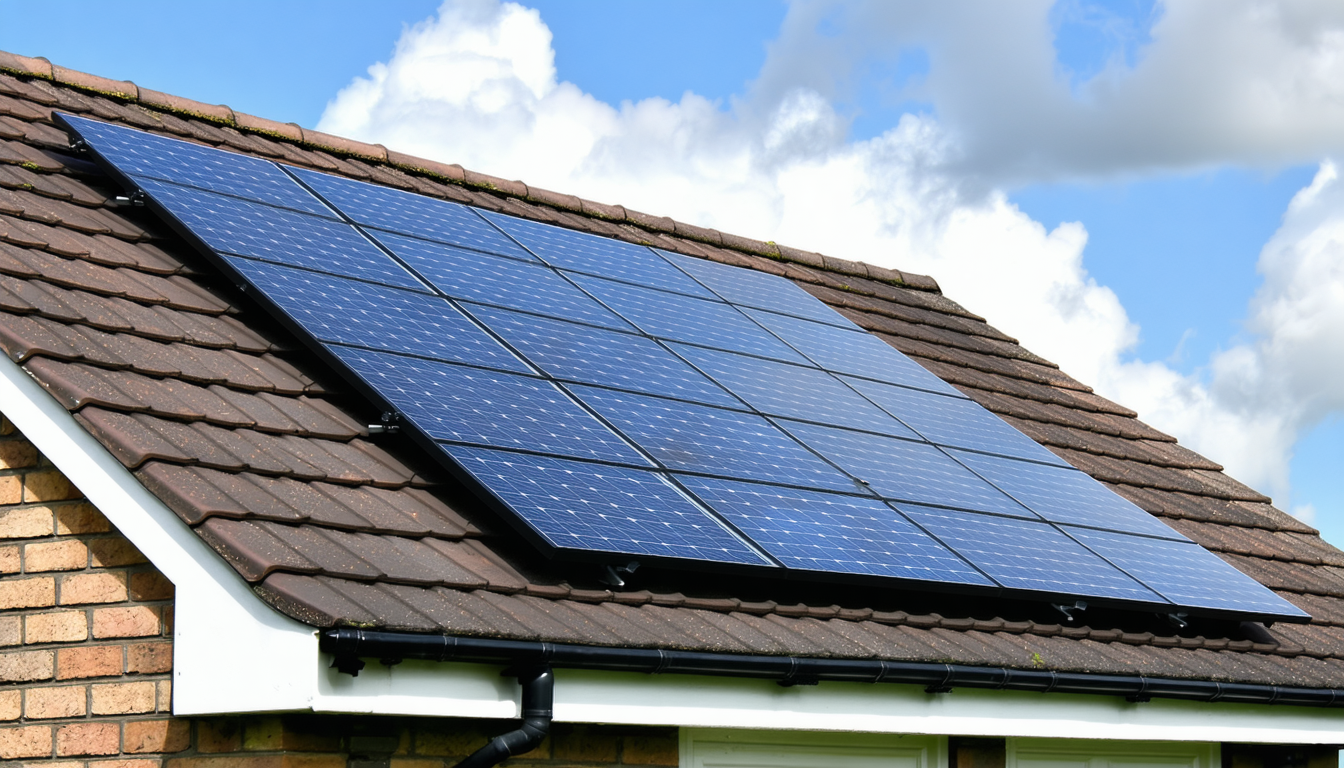
Three years ago, the answer was "maybe, if you're patient." Today? Solar panels are one of the best home investments you can make. Installation costs have dropped 15% since 2023. Electricity prices remain stubbornly high at 26.32p/kWh. And 0% VAT on residential solar (confirmed until at least March 2027) makes the upfront cost even more manageable. Let's look at the actual numbers.
What a system costs right now
A typical 4kWp system (10 panels, enough for most 3-bed homes) costs between £6,000 and £8,000 fully installed. That includes the panels, a hybrid inverter, mounting hardware, scaffolding, and all electrical work. A larger 6kWp system (16 panels, suitable for larger homes or higher usage) runs £8,500 to £11,000.
These prices are from MCS-certified installers (you need MCS certification to access the Smart Export Guarantee). Always get at least 4 quotes. We've seen £2,000+ variation between companies for identical systems on the same roof. The cheapest isn't always best (check reviews and warranty terms), but the most expensive isn't necessarily better either.
How much you'll save annually
A 4kWp south-facing system in the Midlands generates roughly 3,800 kWh per year. Without a battery, you'll self-consume about 45% of that (1,710 kWh), saving 26.32p per kWh on electricity you'd otherwise buy from the grid. That's £450 in avoided electricity costs.
The remaining 55% (2,090 kWh) gets exported to the grid under the Smart Export Guarantee. Export rates vary by supplier: Octopus offers up to 15p/kWh on Flux, EDF pays 5.6p, British Gas pays 4.1p. At an average of 8p/kWh, your export income is £167 per year.
Total annual benefit without battery: £450 + £167 = £617. With a system costing £7,000, that's a payback period of just over 11 years. Not great. But wait; add a battery and the economics shift considerably.
The battery difference
A 5-10 kWh battery stores surplus daytime generation for evening use. This pushes self-consumption from 45% to 75-80%. With a battery, you self-consume 2,850 kWh (saving £750) and export only 950 kWh (earning £76). Total annual benefit: £826.
The combined cost of panels plus battery might be £10,000-12,000. At £826 per year savings, payback is 12-15 years. That sounds worse. But if you're on a time-of-use tariff like Octopus Flux or Intelligent Go (with overnight rates at 7p/kWh and peak export at 25p/kWh), the battery enables arbitrage that can push annual savings above £1,200. On those tariffs, payback drops to 8-10 years.
The other factor: battery prices are falling rapidly. A GivEnergy 5.2kWh battery costs around £2,800 in 2026, down from £4,000 in 2023. Tesla Powerwall 2 (13.5kWh) is about £5,500 installed. You don't have to buy the battery at the same time as the panels; many people add one 2-3 years later when they've seen their generation data and prices have dropped further.
Smart Export Guarantee rates compared
Not all SEG tariffs are equal. Here's what the major suppliers currently pay per exported kWh:
- Octopus Flux: up to 15p/kWh (time-of-use, requires smart meter)
- Octopus Fixed Export: 7.5p/kWh (guaranteed for 12 months)
- E.ON Next Export: 6.4p/kWh
- EDF: 5.6p/kWh
- British Gas: 4.1p/kWh
The difference between the best and worst rate is 11p/kWh. On 2,000 kWh of annual exports, that's £220 per year you could be losing by staying with the wrong supplier. You don't need to buy your import electricity from the same company you export to. You can split them.
The BUS grant: does it apply to solar?
No. The Boiler Upgrade Scheme (BUS) gives £7,500 towards heat pump installation. It doesn't cover solar panels. This is a common misconception. The BUS grant is specifically for replacing fossil fuel heating with air source heat pumps, ground source heat pumps, or biomass boilers. Solar thermal (hot water panels) was previously eligible but was removed in April 2025.
However, solar PV panels do benefit from 0% VAT until March 2027. On a £7,000 system, that saves you £1,400 compared to the standard 20% rate. After March 2027, the government hasn't confirmed whether VAT will return to 5% (the pre-2022 rate for energy-saving materials) or the full 20%.
Impact on your EPC rating
Adding solar panels typically improves your EPC rating by 1-2 bands. A house rated D might move to C after a 4kWp installation. This matters because lenders increasingly offer better mortgage rates for properties rated C or above. And from 2028, all rental properties will need at least a C rating (delayed from the original 2025 target). If you're a landlord, solar panels help you meet that requirement while generating income.
Does solar increase property value?
According to Rightmove data and estate agent surveys, solar panels add 3-4% to a property's value. On a £300,000 home, that's £9,000-12,000; more than the cost of installation. Buyers increasingly look at EPC ratings and energy costs when choosing properties. A home generating its own electricity is a genuine selling point, especially with energy bills as high as they are.
The caveat: this only applies if the panels are owned outright. If you have a "rent-a-roof" agreement (where a third party owns the panels on your roof), it can actually deter buyers who don't want to inherit that contract.
When solar doesn't make sense
Solar isn't ideal for every home. If your roof faces north, generation drops by 40% compared to south-facing. If you're heavily shaded by tall trees or neighbouring buildings, output could fall even further. If you're planning to move within 5 years, the payback period means you won't recoup the cost (though property value uplift offsets some of this). And if your electricity usage is very low (under 1,500 kWh per year), the absolute savings are smaller and payback stretches beyond 12 years.
For everyone else, especially households paying £800+ per year on electricity, the maths works clearly in your favour. Use our solar savings calculator to estimate your specific payback period based on roof size, direction, and location.