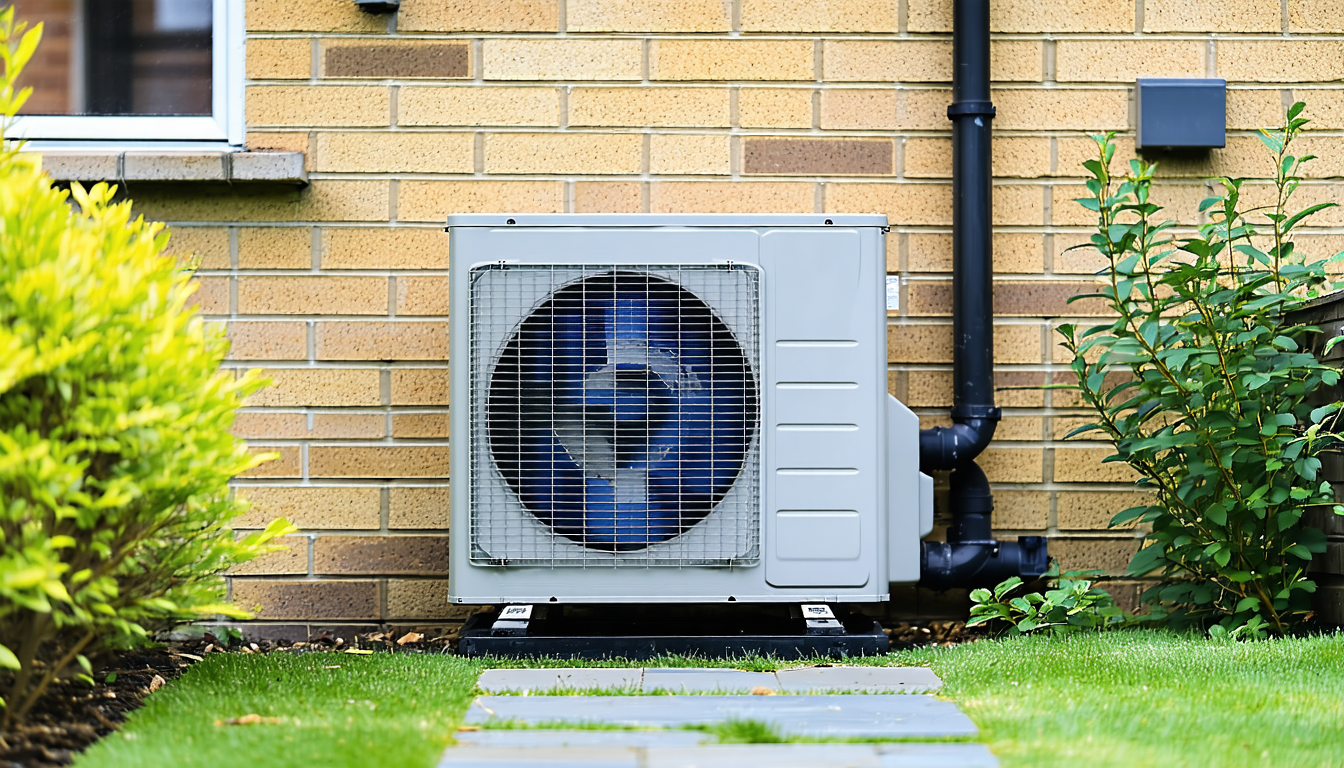
Here's the thing that surprises most people: at current energy prices, a heat pump and a gas boiler cost almost exactly the same to run. The numbers are remarkably close. So the decision between them isn't really about running costs today. It's about installation cost, the £7,500 government grant, your home's insulation, and where energy prices are heading over the next 15 years.
Running costs compared: the raw numbers
A typical UK gas boiler uses around 11,500 kWh of gas per year for heating and hot water. At the current gas rate of 7.97p/kWh, that costs about £917 per year.
An air source heat pump with a Coefficient of Performance (COP) of 3.5 delivers the same amount of heat using roughly 3,286 kWh of electricity. At 26.32p/kWh, that costs about £865 per year.
The difference? The heat pump comes out about £52 cheaper a year on these rates. That gap opened up because the government took VAT off electricity from October 2026 while gas rose around 8%, so the sums now tilt toward the heat pump where they used to be line-ball. A COP of 3.5 means the heat pump produces 3.5 kWh of heat for every 1 kWh of electricity it consumes. It does this by extracting heat from the outside air, even when it's cold (they work down to -15°C). Modern heat pumps achieve COPs of 3.2 to 4.5 depending on the model, installation quality, and how cold it gets outside. A well-installed heat pump on these rates is usually cheaper to run than the boiler, not just level with it.
Installation costs: where it gets complicated
A new gas boiler (combi or system, fully installed with thermostatic radiator valves) costs £2,500 to £4,000. That's straightforward. An air source heat pump installation costs £8,000 to £15,000, depending on the system size, brand, and how much pipework needs modifying.
But the Boiler Upgrade Scheme (BUS) grant gives you £7,500 towards a heat pump. That brings the effective cost down to £500 to £7,500. At the low end (a straightforward installation in a well-insulated home with suitable radiators), a heat pump can cost less than a new boiler after the grant. At the high end, it's still significantly more expensive.
The grant applies to homes in England and Wales that currently use fossil fuel heating (gas, oil, or LPG). You must use an MCS-certified installer. The property must have a valid EPC (any rating; it doesn't need to be C or above). The scheme runs until March 2028, though the government has hinted it may extend.
The real question: what else needs changing?
Heat pumps work best with larger radiators or underfloor heating. They produce water at 35-45°C (compared to a gas boiler's 60-75°C), which means standard radiators need to be bigger to deliver the same warmth. If your home has adequately sized radiators, you might be fine. If not, you're looking at replacing some or all of them, adding £5,000 to £10,000 to the project cost.
Underfloor heating is ideal for heat pumps because it has a massive surface area and works perfectly at low water temperatures. If you're renovating or building an extension, fitting underfloor heating and a heat pump together makes excellent sense. Retrofitting underfloor heating throughout an existing house is expensive and disruptive. Most people compromise: underfloor heating downstairs (during a renovation), larger radiators upstairs.
Insulation matters more than you think
A heat pump in a draughty, uninsulated home has to work harder and longer, which pushes its COP down and running costs up. In a poorly insulated house, the COP might drop to 2.5, making running costs £1,127 per year. That's £350 more than the gas boiler. The money you "saved" on cheap gas gets eaten by the extra electricity.
Before installing a heat pump, you should have: loft insulation of at least 270mm, cavity wall insulation (if applicable), double or triple glazing, and draught-proofing on doors and windows. If your walls are solid (no cavity), external or internal wall insulation costs £5,000-15,000 but transforms the home's heat retention. A well-insulated house holds warmth for hours after the heating turns off, which is exactly how heat pumps are designed to operate.
Long-term savings: where heat pumps win
The government wants to reach net zero by 2050, which means decarbonising home heating. Gas boilers will eventually be phased out; new builds have been banned from fitting them since 2025. The expectation across the energy industry is that electricity prices will gradually fall (as more renewables come online) while gas prices will rise (as carbon levies increase). If electricity drops to 20p/kWh and gas rises to 9p/kWh by 2030, the annual running cost comparison becomes: heat pump £571 vs gas boiler £1,035.
That's speculative. Nobody knows future prices with certainty. But the direction is clear. The government is actively planning to shift environmental levies from electricity bills to gas bills (or to general taxation), which would reduce the electricity unit rate by 3-5p. If that happens, heat pumps become unambiguously cheaper to run.
When a heat pump makes sense
You should seriously consider a heat pump if your home is already well-insulated (EPC rating C or above), if you have underfloor heating or are willing to upsize radiators, if your current boiler is reaching end-of-life (10-15 years old), and if you can access the £7,500 BUS grant. In that scenario, the net installation cost could be £2,000-4,000, running costs now come in a little below gas on the October 2026 rates, and you're future-proofed against rising gas prices and potential gas boiler bans.
When to stick with a gas boiler
Replace like-for-like with a gas boiler if your home is poorly insulated and you can't afford to insulate it first, if your radiators are undersized and you'd need a full system replacement costing £10,000+, if you're planning to move within 5 years (the financial payback period is too long), or if your existing boiler is under 8 years old and still reliable. A new A-rated condensing gas boiler is 92-94% efficient. It's not a bad heating system. It's just not the long-term future.
The hybrid option
A hybrid heat pump keeps your existing gas boiler as backup. The heat pump does most of the work in mild weather (roughly 8 months of the year), while the boiler fires up only on the coldest days when the heat pump's efficiency drops. This gives you 70-80% of the carbon savings without replacing your radiators. Hybrid systems cost £3,000-5,000 after the BUS grant. Running costs are roughly 20% lower than a gas-only system because you're using cheap heat pump electricity for most of the year and only burning expensive gas when temperatures drop below 2-3°C.
For many older homes with standard radiators, a hybrid system is the pragmatic middle ground. It doesn't require the £10,000+ full-system overhaul that a standalone heat pump demands in a poorly insulated house.